
By Sonny Aragba-Akpore

Although the National Telecommunications Policy published by the Federal Government of Nigeria in 2000 is considered outdated today, no one can deny that it clearly set a direction for Nigeria’s telecommunications industry. And in what looked like a befitting tribute to President Olusegun Obasanjo (1999–2007), Dr Ernest Ndukwe, who began the implementation of the policy in what has been described as the Nigerian telecom revolution, said Obasanjo opened the floodgates for what we are seeing today.
From a paltry total of connected telephone lines of about 500,000, the sector was liberalised and freed from the monopoly enjoyed by the State-owned Nigerian Telecommunications Limited (NITEL). The Telecom Policy opened the sector for equal participation by other private companies, thus leading to the provision of telecommunications services we encounter today.
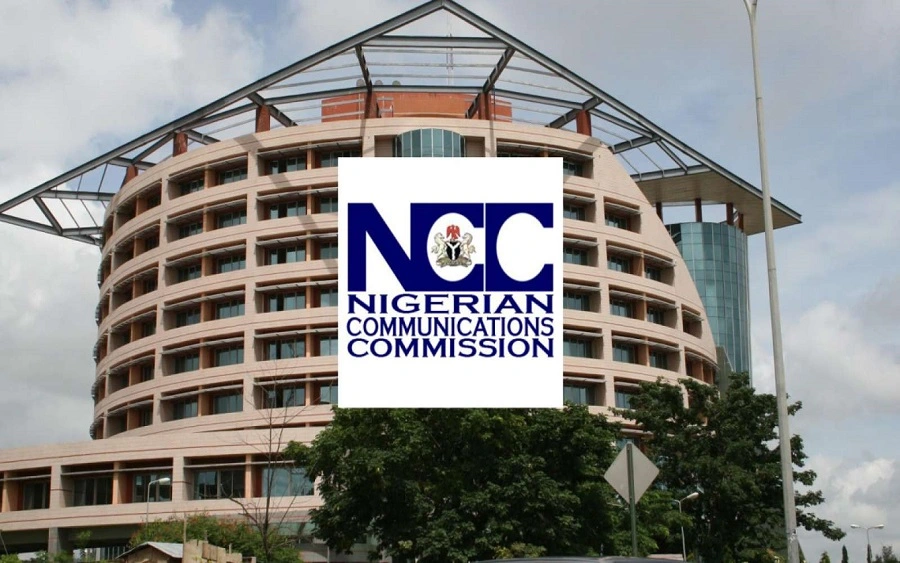
Ndukwe was named Executive Vice Chairman (EVC) of the Nigerian Communications Commission (NCC) while Ahmed Joda was appointed Chairman. That was in the year 2000, and with a strong board in place, the power to implement the Telecommunications Policy 2000 was activated. Apart from other guidelines initiated by the NCC, one of the major fallouts of the document was conducting the auction for Digital Mobile Licences (DML) in January 2001.
The very successful auction, believed to be one of the most transparent globally, opened Nigeria to the world as a country with ease of doing business. In the formative months leading up to the auction, some stakeholders kicked against the adoption of Global System of Mobile Communication (GSM) and canvassed for other technologies like Code Division Multiple Access (CDMA) and Time Division Multiple Access (TDMA), a situation that led the NCC to resolve for Technology Neutrality. Strangely, all the licence beneficiaries, including MTN, Econet Wireless Nigeria (EWN) and Glo Mobile, opted for GSM.
Ndukwe referred to this recently when he spoke at the industry workshop for the Review of the National Telecom Policy 2000 in Lagos. One of the architects of the 2001 Digital Mobile License auctions, Mr Paul Usoro (SAN), was there. Hosted by the NCC, the workshop, which was attended by industry representatives and key stakeholders, was a clarion call for stakeholders to revisit and review the policy in line with the growing telecommunications ecosystem. Ndukwe, at a panel session during the workshop, told the world how Obasanjo’s policies rescued Nigeria from the global shame of a miserable tele-density and laid the foundation for Nigeria’s telecommunications revolution and digital transformation. He traced the country’s telecommunications journey to the liberalisation reforms that opened the sector to competition and investments. It rose from a deeply embarrassing situation of 1,250 lines per month for a population of over 120 million to where it is today.
The government had earlier promulgated Decree 75 of 1992 to open up the industry, and at the advent of democracy in 1999, it went further to open up the sector in 2000 by the policy with effect from September 2000. Obasanjo recognised telecommunications as a major driver of the economy and decided to replace the old telecommunications framework with a new one, leading to the establishment of the National Telecommunications Policy 2000. Bottlenecks against expansion were removed.
Opening the sector to liberalisation and investors. “It was a breakthrough for the sector as things happened quickly beyond imagination,“ Ndukwe explained. Nigeria was seen as an investor’s haven in telecommunications, and the policy became a blueprint for the total liberalisation of the sector, and the rest is now history. “This process was not easy at the time. However, by the year 2001, competitive operators had been licensed to provide digital mobile services, leading to the rapid expansion of connected lines across the country.” While political uncertainties and inconsistencies in policies earlier hampered growth in the sector, all that changed from the year 2000, when the policy framework changed to open up the sector for investors.
“Between 1960 and 2000, NITEL only had a subscriber base of 400,000 fixed lines. Detailed analysis showed that nearly 200,000 of these were concentrated in government offices and private organisations. That meant that fewer than 200,000 lines were available for other Nigerians. But all that changed after the liberalisation of the system,” Ndukwe lamented, advising that the NCC should, after a review of the Telecom Policy, see its next line of action as the review of the Nigerian Communications Act of 2003.
It’s long overdue, especially in line with growing technology development. But the regulator must carry out regular consultations before major regulatory decisions are taken because “you cannot simply sit in an office to make decisions on the future of the sector without engaging the people who operate in it,” Looking ahead, Ndukwe advised that “this policy we are now developing should not be too prescriptive on technology because technology changes too quickly. That is why regular reviews are necessary.“
The NCC in February 2026 published a notice asking members of the public, stakeholders and investors to submit input for the review of the policy. It listed the major pegs of the policy revision to include expansion of broadband access and strengthening of infrastructure. Essentially, the updated policy will introduce a new chapter on national broadband objectives and the protection of Critical National Infrastructure (CNI), designed to safeguard fibre networks and telecom towers from pervasive vandalism.
In 2024 alone, more than 19,000 vandalism incidents were recorded, while 27,000 were recorded in 2025, thus creating the need for enhanced protective measures for this infrastructure. Harmonisation of Right-of-Way (ROW) charges and streamlining permitting processes with a “One-Stop” approach to reduce the cost burden on network operators is also being proposed. High Row fees contributed to an 85% increase in deployment costs in 2024, which in turn drove up consumer pricing.
In addition, frameworks are being developed for Satellite Communications, including Low-Earth Orbit (LEO) and Direct-to-Device (D2D) technologies, to extend connectivity into rural and hard-to-reach areas where fibre deployment is challenging. “A Spectrum Roadmap for 2026–2030 has also been unveiled, outlining plans to open the 6 GHz and 60 GHz bands to provide more unlicensed spectrum for high-speed, reliable Wi-Fi access in public spaces such as schools and hospitals.”
The review is expected to create inclusive dimensions of the policy designed to ensure that connectivity results in meaningful digital participation for all Nigerians. There will be renewed emphasis on Universal Access and Universal Service, with a focus on reducing financial and digital barriers for underserved communities. There will be revisions of the internet chapter to address online safety, content moderation, and internet exchange protocols to help create a more secure and trusted online environment. Speaking at the policy review workshop.
Special Adviser to President Bola Tinubu on Policy and Coordination, Hadiza Bala Usman, said the telecommunications landscape has evolved far beyond voice communication and now serves as the backbone of economic and social activities. She noted that while the 2000 policy successfully drove liberalisation and attracted major investments into the sector, the realities of today’s digital economy demand a fresh direction. “More than two decades later, Nigeria has changed. Technology has changed. The economy has changed. The expectations of citizens have changed,” she said. Usman stressed that the review must produce more than minor adjustments, insisting that Nigeria requires a modern telecom framework capable of supporting innovation, digital governance, economic competitiveness and national development.
Chief Executive of NCC, Aminu Maida, who spoke earlier, told his audience that industry projections, with deeper digital integration, could add about two percentage points to Nigeria’s GDP by 2028 while creating close to two million jobs and significantly expanding government revenues. He recalled that before liberalisation, Nigeria had fewer than 500,000 active telephone lines serving a population of over 120 million people. “The policy served its time well. It helped open the market, attract private investment and establish stronger independent regulation. The industry has since evolved into an infrastructure-driven sector focused on broadband expansion, fibre deployment, spectrum management and universal access. Acknowledging that several structural challenges continue to hinder growth, “these are not merely operational challenges for operators. They are national development issues because they affect the resilience and reach of digital services,” he noted.
He added that Nigeria is now entering a more advanced digital era shaped by technologies such as 5G, artificial intelligence, cloud infrastructure, satellite broadband, cybersecurity and the Internet of Things (IoT). “This is no longer a narrow telecommunications conversation. Telecommunications is no longer just one sector within the economy; it is productivity infrastructure for the entire economy,” he declared. This review aims to develop a modern policy framework capable of supporting innovation, protecting consumers, improving the quality of experience, strengthening investment, and advancing Nigeria’s digital economy ambitions. Maida explained that the workshop was hosted to assess implementation of the existing policy, identify gaps, engage stakeholders, and develop recommendations for a new national telecommunications policy 2026.
“Fibre cuts, vandalism, theft, multiple taxation, right-of-way bottlenecks, delayed approvals, energy constraints, and insecurity do not affect operators alone. They affect citizens, businesses, schools, hospitals, security agencies, financial systems, and public institutions,” Maida said adding “the role of mobile telecommunication in Nigeria as an economic catalyst has taken deeper digitalisation across sectors like agriculture, manufacturing, transport, trade, and government, which could boost our GDP by 2030 by creating an additional two million jobs that generate nearly N2trillion in additional tax revenue.”
Analysts say the review could further strengthen investor confidence in Nigeria’s telecom sector, improve regulatory clarity, and position the country to better compete in Africa’s expanding digital economy landscape. Industry stakeholders at the workshop also underscored the growing importance of telecommunications infrastructure in supporting Nigeria’s digital economy ambitions, especially as the country pushes for wider internet penetration, smart governance systems, and increased adoption of digital financial services.