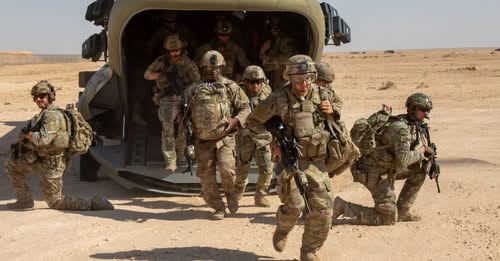

Despite the United States of America ending its joint counterterrorism operations in the Lake Chad Basin and most of its troops withdrawn, Nigeria has asked for to help with intelligence sharing, Commander of U.S. Africa Command (AFRICOM), U.S. Air Force General Dagvin Anderson, has said.

General Anderson, who spoke during a press briefing on the outcome of the African Chiefs of Defence Conference 2026 which ended in Angola, said the partnership with Nigeria has had “the greatest return” as it has allowed the building momentum that will “enable partners to then address these threats themselves.”
The AFRICOM Commander also said that the joint operations with Nigeria ensured that “ISIS’s leadership has been significantly degraded there. And that’s leadership locally that has been disrupted, but also their global network, which is limiting their ability to communicate.”
General Anderson also said the cooperation with Nigeria gave one quick example “of not having external interference.”
“I think the partnership that we’ve shown recently with Nigeria, where Nigeria’s a very capable and large country – it’s got a strong economy; it’s got a large, educated population; it’s got a very capable military” gave insight to the forward, he noted.
“But there are things that we have learned in the counterterrorist fight over several years that we were able to assist and integrate with them to help them with their intelligence and help with the intelligence sharing that eventually led to a cooperative effort to where we were able to bring some unique capabilities that the U.S. brings and be able to prosecute together the number two leader within the ISIS or Daesh organization who is responsible for much of the – their global operations, their global media, and their recruiting.
“And so that operation in the Lake Chad Basin of Nigeria not only helped the countries in that immediate region; it also helps countries globally as that disrupts the ISIS network. And so – and then we have withdrawn much of our forces that were just there for that operation, but are continuing the partnership that Nigeria has asked for to help continue with the intelligence sharing and the understanding that’s necessary to be able to prosecute these difficult tasks.
“So I think as we go forward, that is an example of how we’re looking at engaging with partners to help them be more effective by only bringing unique U.S. capabilities that allow the partner to be effective in these fights.
“Again, I’ll just go back to the Nigeria example, just because it’s a recent success here that we’ve had together, is that ISIS’s leadership has been significantly degraded there. And that’s leadership locally that has been disrupted, but also their global network, which is limiting their ability to communicate.
“So, understanding where those key pressure points are is important as we focus our limited resources from the United States in order to have an impact not just locally but across the continent and internationally.
“And so what’s important here to understand is that what follows and that Nigeria has been very active since that operation in May. They continue to prosecute targets themselves. But as they have talked about this in the information space and created that information environment, they have allowed – or had more defections or surrenders of ISIS followers in that northeastern area of Nigeria. So that’s a combined effort that continues to build. And so that’s what we’re looking at, is where those areas that have the greatest return that allow this type of momentum to build to enable partners to then address these threats themselves,” General Anderson added.